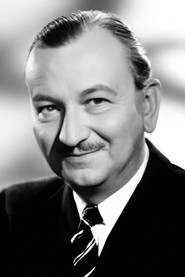
Raymond Huntley
Acting
Born April 23, 1904, King's Norton, Worcestershire, England, UK
Horace Raymond Huntley (23 April 1904 – 15 June 1990) was an English actor who appeared in dozens of British films from the 1930s to the 1970s. He also appeared in the ITV period drama Upstairs, Downstairs as the pragmatic family solicitor Sir Geoffrey Dillon, and other television shows, such as the Wodehouse Playhouse, ('Romance at Droitwich Spa'), in 1975. Born in Kings Norton, Worcestershire (now a suburb of Birmingham) in 1904, Huntley made his stage debut at the Birmingham Repertory Theatre on 1 April 1922, in A Woman Killed with Kindness. His London debut followed at the Court Theatre on 22 February 1924, in As Far as Thought can Reach. He subsequently inherited the role of Count Dracula from Edmund Blake in Hamilton Deane's touring adaptation of Dracula, which arrived at London's Little Theatre on 14 February 1927, subsequently transferring to the larger Duke of York's Theatre. Later that year he was offered the chance to reprise the role on Broadway (in a script streamlined by John L. Balderston); when he declined, the part was taken by Bela Lugosi instead. Huntley did, however, appear in a US touring production of the Deane/Balderston play, covering the east coast and midwest, from 1928-30. "I have always considered the role of Count Dracula to have been an indiscretion of my youth" he recalled in 1989. After Dracula, he made his Broadway debut at the Vanderbilt Theatre on 23 February 1931, in The Venetian Glass Nephew. On returning to the UK, his many West End appearances included The Farmer's Wife (Queen's Theatre 1932), Cornelius (Duchess Theatre 1935), Bees on the Boat Deck (Lyric Theatre 1936) Time and the Conways (Duchess Theatre 1937), When We Are Married (St Martin's Theatre 1940), Rebecca (Queen's Theatre 1940; Strand Theatre 1942), They Came to a City (Globe Theatre 1943), The Late Edwina Black (Ambassadors Theatre 1948), And This Was Odd (Criterion Theatre 1951), Double Image (Savoy Theatre 1956), Any Other Business (Westminster Theatre 1958), Caught Napping (Piccadilly Theatre 1959), Difference of Opinion (Garrick Theatre 1963), An Ideal Husband (Garrick Theatre 1966), Getting Married (Strand Theatre 1967), Soldiers (New Theatre 1968) and Separate Tables (Apollo Theatre 1977). He also starred opposite Flora Robson in the Broadway production of Black Chiffon (48th Street Theatre 1950). Often cast as a supercilious bureaucrat or other authority figure, Huntley was also a staple figure in British films, his many appearances including The Way Ahead, I See a Dark Stranger, Passport to Pimlico and The Dam Busters. In his later years, he became well-known on television as Sir Geoffrey Dillon, the family solicitor to the Bellamys in LWT's popular 1970s drama series Upstairs, Downstairs. Huntley died in Westminster Hospital, London in 1990. In his obituary, the New York Times wrote, "During his long career the actor played judges, bank managers, churchmen, bureaucrats and other figures of authority. He could play them straight if necessary, but in comedy his natural dryness of delivery was exaggerated to the point where the character he was playing invited mockery as a pompous humbug." Source: Article "Raymond Huntley" from Wikipedia in English, licensed under CC-BY-SA 3.0.
Filmography
- 1984A Voyage Round My Father — Judge
- 1984Sleepwalker — Old Englishman
- Brass — Judge
- 1976The Portland Millions — Dr. Tristram
- Victorian Scandals — Dr Tristram
- My Honourable Mrs — Professor Walter Ramsay
- 1974Symptoms — Burke
- Crown Court — Mr. Justice Downes, Mr. Justice Ambleforth
- Sykes — Mr. Gatwick
- 1972That's Your Funeral — Emmanuel Holroyd
- 1972Young Winston — Old Officer
- Justice — Judge, High Court Judge
- Upstairs, Downstairs — Sir Geoffrey Dillon
- That's Your Funeral — Emanuel Holroyd
- 1969Arthur? Arthur! — George Payne
- 1969Destiny of a Spy — Supt. Pode
- ITV Saturday Night Theatre — Alderman Tindal
- Softly Softly: Task Force — Doctor Mancroft
- 1969The Adding Machine — Smithers
- Who-Dun-It — Inspector Elvin
- 1968Hostile Witness — John Naylor
- 1968Hot Millions — Bayswater
- 1966The Great St Trinian's Train Robbery — Sir Horace, the Minister
- A Man Called Harry Brent — Sir Gordon Town
- Gideon's Way — Sir Percy Richmond
- 1965Rotten to the Core — Governor
- 1964Father Came Too! — Mr. Wedgewood
- 1964The Black Torment — Colonel John Wentworth
- The Wednesday Play — Superintendent Willow, Dr. Hallam Aitkinson
- 1963Nurse on Wheels — Vicar Walcott
- 1963The Yellow Teddy Bears — Harry Haliburton
- 1962Crooks Anonymous — Mr. Wagstaffe
- 1962On the Beat — Sir Ronald Ackroyd
- 1962Only Two Can Play — Vernon
- Steptoe and Son — Psychiatrist
- 1962Waltz of the Toreadors — Ackroyd
- Sir Francis Drake — Doctor Dee
- 1961Tune On the Old Tax Fiddle — Mr. Gaunt
- 1960A French Mistress — Reverend Edwin Peake
- Barnaby Rudge — Mr. John Chester
- 1960Bottoms Up! — Garrick-Jones
- 1960Breathless — A Journalist (uncredited)
- Danger Man — Clements
- 1960Follow That Horse!
- 1960Make Mine Mink — Inspector Pape
- On Trial — Travers Humphreys
- 1960Our Man in Havana — General
- 1960Sands of the Desert — Bossom
- Sunday-Night Play — The Reader, Sir Edward Moss, Sir Arthur Hopwood-Lane, Herbert Nodes, Gilbert Morris
- 1960Suspect — Sir George Gatting the Minister of Defense
- 1960The Pure Hell of St Trinian's — Judge Slender
- 1959Carlton-Browne of the F.O. — Foreign Secretary Tufton-Slade
- 1959I'm All Right Jack — Magistrate
- 1959Innocent Meeting — Harold Phillips
- Interpol Calling — Schroeder
- Knight Errant Limited — Dr. Felthorpe, Henry Latto
- No Hiding Place — Ward
- 1959The Mummy — Joseph Whemple
- 1958Next to No Time — Forbes, Factory Supervisor
- 1958Room at the Top — Mr. Hoylake
- 1958The Criminals — Hector Crawford
- A Time Of Day
- 1957Brothers in Law — Tatlock Q.C.
- Theatre Night — Sir Norman Tullis, Dr. Rodd
- 1957Town on Trial — Dr. Reese
- Armchair Theatre — Sturdee, Carlo, Hector Crawford, Mr. Gaunt
- Hancock's Half Hour — Doctor
- The Count of Monte Cristo — Reimer
- 1956The Green Man — Sir Gregory Upshott
- 1956The Last Man to Hang — Attorney General
- 1955Doctor at Sea — Captain Beamish
- 1955Geordie — Olympic Selector
- 1955The Constant Husband — J.F. Hassett
- 1955The Dam Busters — Official, National Physical Laboratory
- 1955The Prisoner — The General
- 1954Aunt Clara — Rev. Maurice Hilton
- 1954Hobson's Choice — Nathaniel Beenstock
- 1954Orders Are Orders — Col. Fred Bellamy
- 1954The Teckman Mystery — Maurice Miller
- 1953Glad Tidings — Tom Forester
- 1953Laxdale Hall — Samuel Pettigrew, M.P.
- 1953Meet Mr. Lucifer — Patterson
- 1953Number Three — Prof. Brander
- 1952The Last Page — Clive Oliver
- 1951Mr. Denning Drives North — Wright
- 1951The House in the Square — Mr. Throstle
- 1951The Long Dark Hall — Chief Inspector Sullivan
- 1951When We Are Married — Councillor Albert Parker
- Sunday Night Theatre — Mr. Culver, Crichton, Spence, Inspector Hubbard, Prof. Brander, Gordon Meslin, Challiss, Manning, Lord Laithwaite
- 1950Trio — Mr. Henry Chester
- 1949Passport to Pimlico — Mr. Wix
- 1948Broken Journey — Edward Marshall
- 1948It's Hard to be Good — Williams
- 1948Mr. Perrin and Mr. Traill — Moy-Thompson
- 1948So Evil My Love — Henry Courtney
- 1946I See a Dark Stranger — J. Miller
- 1946School for Secrets — Prof. Laxton-Jones
- 1944The Way Ahead — Pvt. Herbert Davenport
- 1944They Came to a City — Malcolm Stritton
- 1943The New Lot — Barrington
- 1943When We Are Married — Albert Parker
- 1942The Day Will Dawn
- 1941"Pimpernel" Smith — Marx
- 1941Freedom Radio — Rabenau
- 1941Inspector Hornleigh Goes to It — Dr. Kerbishley
- 1941The Ghost Train — John Price
- 1941The Ghost of St. Michael's — Mr Humphries
- 1940Night Train to Munich — Kampenfeldt
- 1939Let's Be Famous — Singer in trio (uncredited)
- 1938When We Are Married — Councillor Albert Parker
- 1937Dinner at the Ritz — Gibout
- 1937Knight Without Armour — White Officer
- 1937London Melody — Policeman Outside Nightclub
- 1936Rembrandt — Ludwick
- 1936Whom the Gods Love: The Original Story of Mozart and His Wife — Langer
- 1935Can You Hear Me, Mother? — Dolan
- 1934What Happened Then?
Appearances as themselves (1)
- Omnibus — Self