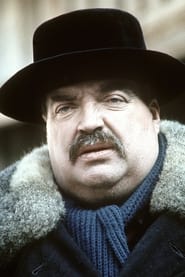
Helmut Qualtinger
Acting · Writing
Born October 8, 1928, Vienna, Austria
Helmut Qualtinger was born in Vienna, Austria. He initially studied medicine, but quit university to become a newspaper reporter and film critic for local press, while beginning to write texts for cabaret performances and theater plays. Qualtinger debuted as an actor at a student theater and attended the Max Reinhardt Seminar as a guest student. Beginning in 1947, he appeared in cabaret performances. In 1949, Qualtinger's first theatrical play, Jugend vor den Schranken, was staged in Graz. Up to 1960, Qualtinger collaborated on various cabaret programmes with the Namenlosen Ensemble made up of Gerhard Bronner, Carl Merz, Louise Martini, Peter Wehle, Georg Kreisler, and Michael Kehlmann. Qualtinger was famous for his practical jokes. In 1951, he managed to launch a false report in several newspapers announcing a visit to Vienna of a (fictional) famous Inuit poet named Kobuk (author of "The Burning Igloo"). The reporters who assembled at the railway station however were to witness Qualtinger, in fur coat and cap, stepping from the train. Asked about his "first impressions of Vienna", the "Inuit poet" commented in broad Viennese dialect, "Haaaßis'sdo - [It's hot here]". The short one-man play Der Herr Karl, written by Qualtinger and Carl Merz and performed by Qualtinger in 1961, made the author known across German-speaking countries. "Herr Karl", a grocery store clerk, tells the story of his life to an imaginary colleague - from the days of the Habsburg empire, the First Austrian Republic, the Austrofascist regime leading up to the Anschluss (annexation) by Nazi Germany, World War II and finally military occupation by Allied forces in the 1950s, seen from the perspective of a one who is a prototypical opportunist. Qualtinger's portrayal of the petit-bourgeois Nazi collaborator came at a time when "normality" had just been restored and Austrians' involvement in the Nazi movement was being downplayed and "forgotten", making many enemies for the author, who even received anonymous threats of murder. Beginning in the 1970s, Qualtinger frequently performed recitals of his own and other texts, including excerpts from Adolf Hitler's Mein Kampf and Karl Kraus' Die letzten Tage der Menschheit (The Last Days of Mankind). These recitals were highly popular and resulted in several records being published. Qualtinger played countless theater, TV and film parts, making his final appearance in The Name of the Rose in 1986, along with Sean Connery. Qualtinger died in Vienna on 29 September 1986, of a liver condition. From Wikipedia, the free encyclopedia
Filmography
- 2023Der Herr Karl — Writer
- 2022Der Herr Karl — Writer
- 2011Qualtinger
- 1986The Diary of Dr. Döblinger — Dr. Döblinger
- 1986The Name of the Rose — Remigio da Varagine
- 1985Cat's Game — Viktor
- 1985Helmut Qualtinger liest Mein Kampf
- Krimistunde — Harry Beggs
- 1981Die Hinrichtung
- 1979Tales from the Vienna Woods — Zauberkönig
- 1978Feuerwasser — Sepp O'Brian
- 1978Grandison — Dr. Ludwig Pfister
- 1977Abelard - Die Entmannung
- 1977Mulligans Rückkehr — Mulligan
- The Devils — Hauptmann Ignaz Lebädkin
- Die Alpensaga — Allinger
- 1976MitGift — Huck
- 1975Eiszeit — Officer
- 1975End of the Game — Von Schwendi
- 1975Von und mit....Helmut Qualtinger
- 1974Der Kulterer — Kulterer
- 1974Ward 6 — Ragin
- 1973Weights and Measures — Anselm Eibenschütz
- 1971Die heilige Johanna — Soldat
- 1971Geschäfte mit Plückhahn — Erwin Plückhahn
- 1971König Johann — Johann Plantagenet, König von England
- 1970Das weite Land — Natter
- 1970Passion eines Politkers — Nationalrat Bröschl
- 1969Diary of a Serial Killer — Rudi Böhm
- 1969Die Geschichte der 1002. Nacht — Ignaz Trummer
- 1968Das vierte Gebot — Schalanter
- 1968The Castle — Bürgel
- 1967Der Herr Karl — Herr Karl, Writer
- 1967Der Paukenspieler — Ferry, Writer
- 1967Kurzer Prozeß — Inspektor Pokorny
- 1967Umsonst — Pitzl
- 1966Der Fall Bohr — Matzenauer
- 1966Die Hinrichtung — Scharfrichter Engel
- 1966Samba — Capitano Agamemnon Heredia
- 1965Der Himbeerpflücker — Konrad Steisshäuptl
- 1965Lumpazivagabundus — Knieriem, ein Schustergeselle
- Radetzkymarsch — Kapturak
- 1963And So to Bed — Writer
- 1963Biedermann und die Brandstifter — Schmitz - ein Ringer
- 1962Einen Jux will er sich machen — Melchior - Hausknecht
- 1961Die Kurve — Ministerialdirigent Kriegbaum
- 1961Geschichten aus dem Wienerwald — Oskar
- 1961Mann im Schatten — Oberpolizeirat Dr. Radosch
- 1960The Magnificent Rogue — Seppl Reber
- 1959Die schöne Lügnerin — Detective Zawadil
- 1959Mikosch of the Secret Service — Oberst Fedor Fedorowitsch Ganiew
- 1958Man müßte nochmal zwanzig sein — Kanzakis
- 1957Das Abgründige in Herrn Gerstenberg — Der Schlechtere
- 1957Scherben bringen Glück — Wollner
- 1955Du bist die Richtige — Orientalischer Fürst
- 1955Hanussen — Ernst Röhm
- 1955Sonnenschein und Wolkenbruch — Werbefachmann
- 1954König der Manege — Mirko
- 1953Einmal keine Sorgen haben — Kraps
- 1953Hab’ ich nur Deine Liebe — Direktor Pokorny
- 1952April 1, 2000
Appearances as themselves (9)
- 2022An Oral History of: The Name of the Rose — Self (archive footage)
- Ikonen Österreichs — Self (archive footage)
- kult.reloaded — Self (archive footage)
- 1986The Abbey of Crime: Umberto Eco's 'The Name of the Rose' — Self
- 3 nach 9 — Self
- 1973Der große Zauberer - Max Reinhardt — Self
- 1972Wer war Andre Heller? — Himself
- Das Profil — Self
- German Film Award — Self